


Q - Do the terms ‘tower’ and ‘cellsite’ mean the same
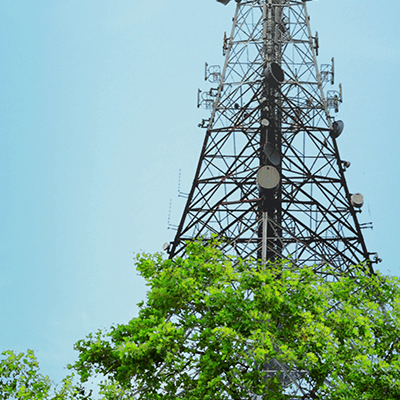
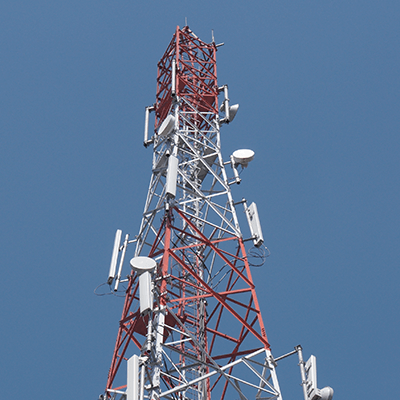
A - The term ‘tower’ signifies the physical structure of a Telecom tower and ‘cellsite’ signifies the Telecom tower and associated electronics & infrastructure. But these terms are interchangeably used in common industry parlance. |
Q - What is the business of GTL Infra?
A - GTL Infra is in the business of provisioning passive infrastructure at cellsites on a shared basis to multiple operators. This mainly includes antenna space on towers and other passive infrastructure components at a cellsite. |
Q - What does a typical cellsite comprise of
A - A cell site has active and passive infrastructure components. Active component includes the antenna, transceivers, feeder cables and microwave radio equipments. Passive components include the land, tower, shelter, air conditioning equipment, diesel electric generator, battery, electrical supply, technical premises and easements etc. |
Q - Why will the Cellular Operators in India prefer to share towers?
A - The chief drivers for growth in demand for tower sharing are as follows:
a) Expansion by Operators with new licenses
Operators who won pan India and dual technology licenses in 2008 are expanding their networks into Class ‘B’ and ‘C’ circles in a major way. They are undertaking speedy rollouts in these areas, which is creating demand for co-location on existing towers and the new towers.
The entry of players who were issued telecom licenses in 2008 will create an opportunity of tower sharing in the metros and Class A circles initially, where first phase of their rollout is expected. These Operators are expected to launch their services to meet periodic targets set by Telecom Regulatory Authority of India (TRAI) for their rollouts.
b) Incumbent operators efforts to improve service quality and network capacity
As subscribers are being rapidly added, the tolerance for lack of coverage is diminishing, as they are beginning to move towards data centric applications. The implementation of Mobile Number Portability (MNP), which will allow subscribers to switch Operators while keeping the same ‘subscriber number’ is expected to increase subscriber churn. This might act as a catalyst for increasing the for towers demand from these operators.
c) Rollouts by 3G & WiMAX Operators
The impending auction of third-generation (3G) licenses is expected to take place in India in the later half of 2009, followed by WiMAX licenses shortly thereafter. Industry experts suggest that this represents an opportunity that will equal or exceed half of the entire wireless voice tower portfolio size. Since Operators will be making large investments for licenses, they will be willing to share passive infrastructure for quicker break even. |
Q - Who are the constituents of the Indian tower sector?
A - Tower companies in India can be mainly classified into three groups viz.
Operator owned Tower companies (Bharti Infratel, Reliance Infratel)
Operator owned Joint ventures (Indus, WTTIL-Quippo)
Independent Tower companies (GTL Infra, Essar Towers, ATC-Xcel etc.) |
Q - What is the current number of towers in India and what will be the demand for towers in the future?
A - As of March 31, 2009, the country is estimated to have around 2,60,000 towers. The break-up of ownership of the towers in the country, is as below:

The future demand for towers is estimated to be around 2,00,000 towers in the next 2 – 3 years. |
Q - What is GTL Infra’s market share?
A - Independent tower companies own around 7.5% of the total tower portfolio in the country. GTL Infra has around 50% share of the independent tower companies owned portfolio. |
Q - What is the company’s portfolio presence (As on March 31, 2009)
A -
| Circle cluster |
No. of Towers |
| RFIE |
CWIP |
Total |
| Class A |
3,509 |
894 |
4,403 |
| Class B |
3,224 |
619 |
3,843 |
| Class C |
720 |
361 |
1,081 |
| Metros |
84 |
0 |
84 |
| Total |
7,537 |
1,874 |
9,411 |
Note: RFIE – Ready for Installation of Equipments
CWIP – Capital Work in Progress |
Q - How are locations for towers selected?
A - The company has adopted a tower rollout strategy which aims at their better utilization. The company’s develops sites which are backed by ‘Service orders’ received from the Operators who will be the ‘Anchor tenants’ on them. The location co-ordinates of a site are given by the Operator, and is analyzed by the company for share-ability potential. The location analysis involves mapping the presence of towers in vicinity of the proposed location, coverage prediction, Line of Site prediction for microwave backhauling, etc. The company prioritises those sites which have multiple tenant demand, to get better returns on its investment. |
Q - What is the Ground based towers (GBT) Rooftop towers (RTT) split of the company’s tower portfolio?
A - The GBT:RTT ratio is 88:12, as most of the towers are located in semi urban and rural areas of India. |
Q - What is the latest tenancy on the towers?
A - As on March 31, 2009, the company had a tenancy of 0.96 on its ‘RFIE’ towers |
Q - What is the average site rental paid by the Operators for a ground based and roof-top cellsites?
A - The average monthly rental charged by the company for a ground based and roof-top tower is Rs.31–33,000 (US$650–700) and Rs.19–21,000 (US$400-440) respectively. |
Q - Expenses involved in this business
A - The major elements of cellsite operating expenses include monthly rentals for underlying land, cellsite O&M expenses and Energy & Fuel expenses. Cellsite O&M expenses consists primarily of repairs and maintenance charges for cellsite components, Annual Maintenance Charges (AMC) , rates and taxes and security expenses.
The Energy & Fuel expenses to operate a cellsite are reimbursable from Operators and are apportioned equally among all tenants. Overhead expenses for cellsite O&M include selling, general and administrative (SGA) expenses to support the services.
The typical monthly Opex for GBT and RTT is in the range of Rs.17-20,000 (US$350-420) and Rs. 11-13,000 (US$230-270) . The break-up for opex for a ground based site is as follows:

|
Q - What were the latest financial results of the company
A - Revenue from Operations was Rs. 220.83 Crores for FY 2008-09 as against Rs. 124.58 Crores for FY 2007-08, recording a Y-o-Y growth of 77%.
Operating Profit (EBIDTA) for FY 2008-09 was Rs. 114.08 Crores as against Rs. 64.68 Crores for FY 2007-08 recording a Y-o-Y growth of 76%. |
Q - Key Ratio’s (Based on latest figures)
- Key Ratio’s (Based on latest figures)
- Secured debt/Equity – 1.65
- Total Net debt/Equity – 1.61
- Total Net Debt/EBIDTA – 19.01
- EBIDTA/Interest or Interest Coverage ratio – 1.16
- Fixed assets coverage ratio – 1.43
- EV*/EBIDTA – 40.30
- EV*/Tower - $ 99,000
* As on July 19, 2009 |
Q - What is the Future rollout plan of the company
A - The company plans to rollout 23,700 towers by March 2011 and extend its presence in all 22 telecom circles of India. |
Q - What is the funding required for the planned rollout
A - We are fully funded for our capex plan till 2011, which amounts to Rs. 7,265 Crores (approx. US$ 1.51 Bn.) through debt and equity. |
Q - Does GTL Infra pay any dividend
A - The company aims to maintain balanced capital efficiency through investment to meet the requirements of its growing business, undertake selective acquisitions and at the same time return cash to the shareholders.
Under the SEBI and Companies Act regulations, currently the company is not eligible to declare dividends. |
Q - Which are the subsidiaries of the company
A - The company has one subsidiary named ‘Towers Worldwide Ltd.
|
Q - Where is the stock listed and what is the stock code/symbol
A - The stock is listed on BSE and NSE. The stock code for BSE is 532775 and NSE is GTLINFRA.
|
Q - What does the ‘Quiet/Silent period’ for the company mean
A - The Quiet/Silent period for the company in every quarter denotes the period between the date of sending of notice of quarterly results to the Stock exchange by the company and the date of announcement of Results. In this period, the company’s Investor relations/Corporate Communications team is restricted from meeting the analysts or commenting on the company’s performance or results.
|